Methotrexate
Methotrexate-939
Methotrexate is a drug used solely or in combination with other anti-neoplastic drugs for the treatment of certain neoplastic diseases, severe psoriasis, and adult rheumatoid arthritis. Methotrexate has the potential for serious toxicity. Patients undergoing methotrexate therapy should be closely monitored so that toxic effects are detected promptly. Relatively low doses of methotrexate (approximately 7.5 - 25 mg/week) have been used in the treatment of nonmalignant diseases such as severe psoriasis, asthma, rheumatoid arthritis, sarcoidosis, and transplant therapy. Intermediate to high doses of methotrexate (approximately 35 mg/m2 – 12 g/m2) with leucovorin (citrovorum-factor) rescue have been used with favorable results in the treatment of osteogenic sarcoma, leukemia, non-Hodgkin’s lymphoma, and lung and breast cancer. The efficacy of methotrexate in the treatment of other tumors such as prostatic cancer is being investigated.
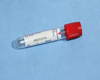
- Protect from light
- Specimens should be collected at 24, 48 and 72 hours after high-dose infusion
- Allow sample to clot
- Spin
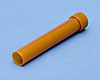
- Immediatley transfer serum to an Amber transfer vial/tube (AHL), labelled as serum
Sodium heparin (Na hep) plasma
EDTA plasma
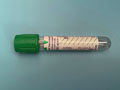
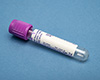
Immediately following collection, mix sample thoroughly by gently inverting 8 - 10 times, to prevent clotting
Lt green PST:
Spin within two (2) hours of sample collection
Dk green/Lavender:
- Spin
- Transfer plasma to a False bottom plasma/serum transport vial/tube (AHL), labelled as the appropriate plasma type, within two (2) hours of sample collection
Plasma separator (Lt green PST)
or
False bottom plasma/serum transport vial/tube (AHL)
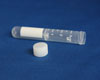
Protect from light
Refrigerated - 14 days
Frozen* - 1 month
Freeze/thaw cycles - stable x 3
- Specimens collected in gel tubes
- Improper labels (unlabeled or mislabeled)
- Hemolysis (some procedures)
- Improper anticoagulant or ratio
- Delay in transport
- Improper storage temperature affecting results
- Improper container
- Leaking container resulting in compromised specimen
- Quantity not sufficient (QNS)
Homogeneous Immunoassay
Varies with clinical indications
Toxic Values for Methotrexate:
>50.0 uMoles/L at 24 hours post infusion
>10.0 uMoles/L at 48 hours post infusion